
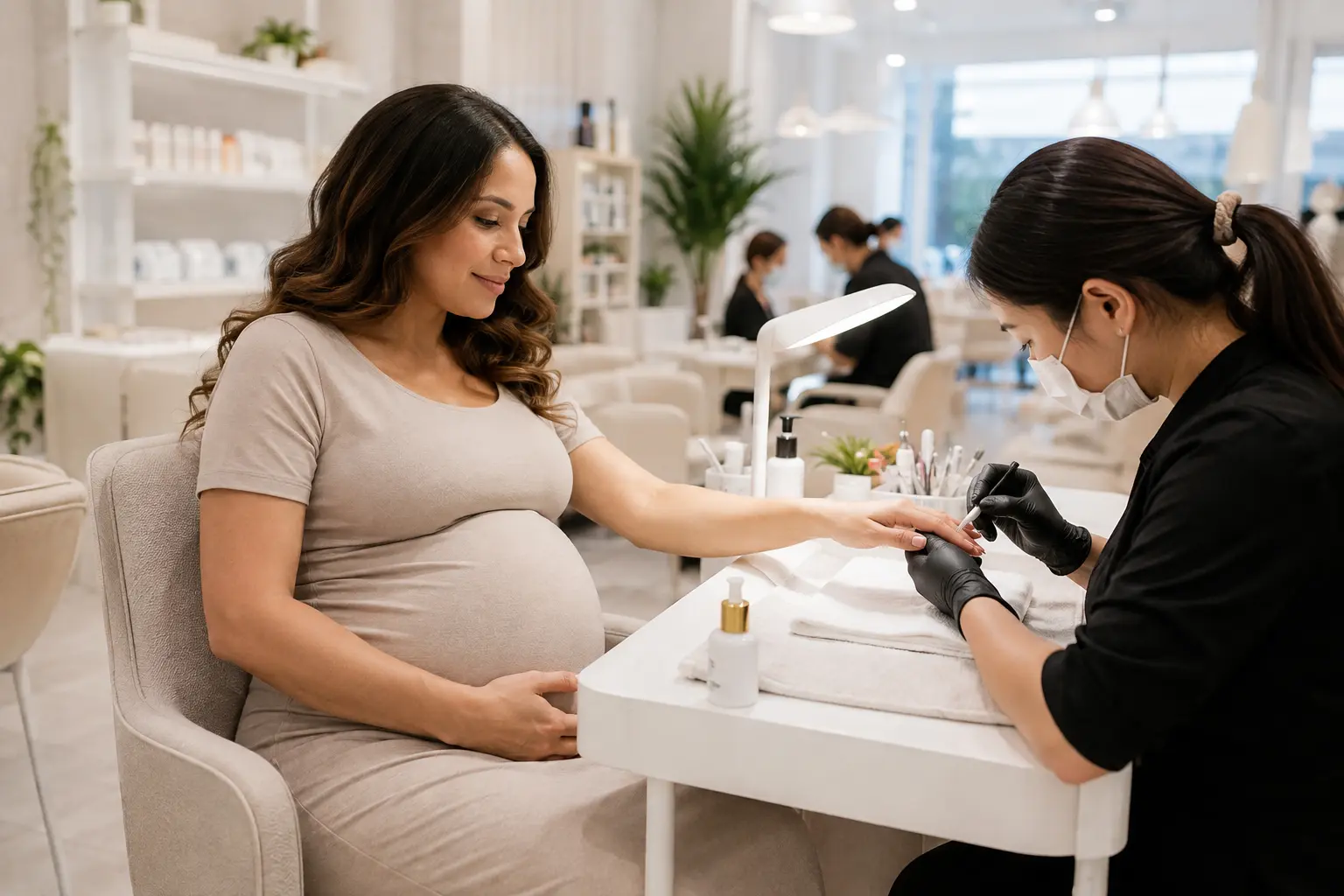

A practical, evidence-based guide to getting your nails done while pregnant, including manicures, pedicures, gel, acrylics, dip powder, salon fumes, and nail polish remover.
Quick answer: Can you get your nails done while pregnant ? For most pregnant people, an occasional manicure or pedicure is generally considered low risk. If you are getting your nails done while pregnant, choose a clean salon with good ventilation and take breaks if strong smells make you uncomfortable. Choose a clean, well-ventilated salon. Avoid unnecessary skin cuts. Limit strong fumes if they make you feel unwell. Also, follow your healthcare team’s instructions if you are approaching a procedure or delivery.
Pregnancy can turn an ordinary beauty appointment into a long list of questions. Is regular nail polish okay? What about gel or acrylics? Are salon fumes dangerous? Is acetone safe? Should you avoid manicures during the first trimester?
The reassuring part is that routine nail treatments involve relatively small exposures for an occasional salon customer. MotherToBaby, an evidence-based teratology information service, notes that routine treatments expose customers to small amounts of common nail-product chemicals. The service does not expect these exposures to increase pregnancy risks.
Still, “generally low risk” does not mean every salon practice makes sense. A few simple precautions can make your appointment more comfortable and pregnancy-conscious.
This guide explains what experts know, what remains uncertain, and how to approach nail care during pregnancy without unnecessary fear.
Get Your Nails Done While Pregnant: Is It Safe?

In most cases, yes. An occasional manicure or pedicure is generally considered acceptable during pregnancy. Use products as directed, and choose a salon with good ventilation and hygiene practices.
Many nail products contain solvents, resins, plasticizers, methacrylates, or other ingredients with intimidating names. However, exposure level matters. Toxicity depends on dose, frequency, route of exposure, and duration.
A customer who visits a salon occasionally has a very different exposure pattern from a nail technician. Technicians may work around products and fumes for many hours each week.
That difference matters. Some occupational studies have looked at people with repeated workplace exposure. Even so, the evidence remains mixed and limited. MotherToBaby recommends ventilation and appropriate workplace protections for nail technicians. It also notes that routine cosmetic nail treatments have not shown a known increased pregnancy risk.
Get Your Nails Done While Pregnant: What About the First Trimester?
If you want to get your nails done while pregnant during the first trimester, there is no well-established medical rule saying you must avoid all manicures or pedicures. This period is important for fetal development. So, it is understandable to want to reduce avoidable chemical exposure.
A cautious approach makes sense. However, you do not need to assume that one routine manicure will cause harm.
If you are sensitive to smells, the first trimester may feel like an uncomfortable time for a salon visit. Pregnancy-related nausea can make acetone, acrylic liquid, polish, and other salon odors feel much stronger.
If a smell causes a headache, dizziness, or nausea, step outside for fresh air. You can also reschedule your appointment.
Is Regular Nail Polish Safe During Pregnancy?
Traditional nail polish is one of the simpler manicure options during pregnancy. Some formulas may contain toluene, formaldehyde-related compounds, or phthalates. However, formulations vary, and manufacturers have reduced the use of some ingredients over time.
The U.S. Food and Drug Administration notes that some nail hardeners and polishes can contain formaldehyde. Toluene has also been used as a solvent in nail products.
Normal consumer use creates a very different exposure level from high-dose industrial exposure.
If you want to be more selective, look for products marketed as “3-free,” “5-free,” or with broader ingredient-exclusion claims. These labels can help when you compare products. However, they do not guarantee a completely risk-free formula.
Ingredient transparency and proper use matter more than treating “free-from” marketing as a medical certification.
Are Gel Nails Safe During Pregnancy?

A standard soak-off gel manicure generally involves low exposure. The technician applies the polish in thin layers and cures each layer under a UV or LED nail lamp.
The concern with gel is not that it has been proven to harm pregnancy. Instead, gel manicures involve two practical considerations. One involves UV exposure to the hands. The other involves more intensive removal.
If you get gel manicures frequently, you can reduce UV exposure to your hands. Apply broad-spectrum sunscreen to the exposed skin before your appointment. You can also wear UV-protective, fingerless manicure gloves.
Do not put sunscreen directly on the nail plate if it could interfere with salon preparation or product adhesion.
If you are deciding whether gel suits you, Morning Fable’s dip powder vs. gel nails comparison explains the differences in durability, feel, application, and removal.
Can You Get Acrylic Nails While Pregnant?

Acrylic nails use methacrylate-based products to create a hard enhancement over the natural nail.
MotherToBaby notes that routine acrylic use exposes the body to only a small amount of methacrylate through the skin or lungs. That level is not expected to increase pregnancy problems.
Irritation and allergic reactions can still occur. This risk becomes more relevant when uncured product repeatedly touches the skin.
Acrylic services can also create stronger odors than a basic polish manicure. Good ventilation therefore matters.
If a salon smells overwhelmingly chemical when you walk in, consider choosing another salon. You can also choose a less intensive service.
If you are choosing between extensions, see Morning Fable’s detailed acrylic vs. gel nails guide before booking.
What About Dip Powder Nails During Pregnancy?
Dip powder systems combine bonding liquids with polymer powders. Most systems use acetone during removal.
Pregnancy does not automatically make dip powder off-limits. However, salon hygiene becomes especially important.
A better practice involves pouring or brushing powder onto each client’s nails. Avoid salons that repeatedly dip multiple clients fingers into the same communal jar.
This is mainly an infection-control issue rather than a pregnancy-specific chemical concern.
If you like long-wear manicures, the Morning Fable gel-versus-dip guide covers removal, strength, flexibility, and maintenance in more detail.
Is Acetone Safe During Pregnancy?

Acetone can remove regular nail polish, soak-off gel, dip powder, and some artificial nail products.
According to MotherToBaby, ordinary nail-polish removal exposes the body to only a small amount of acetone through the skin or lungs. That level is not expected to increase pregnancy risks.
You can still reduce unnecessary exposure. Keep the room well ventilated. Use only as much remover as you need. Avoid prolonged skin soaking when a targeted cotton-wrap method works.
After removal, wash your hands or feet.
For a practical breakdown of when acetone is necessary, read Morning Fable’s nail polish remover vs. acetone guide.
Salon Fumes: When Should You Be Concerned?
The characteristic smell of a nail salon comes from volatile chemicals in polishes, removers, adhesives, acrylic systems, disinfectants, and other products.
If you get your nails done while pregnant, a strong chemical smell does not automatically mean you are receiving a dangerous dose. However, heavy fumes are a good reason to check the salon’s ventilation.
A well-run salon should use active air exchange or local ventilation. Simply masking odors with fragrance does not solve the problem.
If your eyes or throat burn, leave the area and get fresh air. Do the same if you feel dizzy, nauseated, or develop a headache.
Pregnancy can also make you more sensitive to odors even when the exposure itself remains low.
The Bigger Pregnancy Concern: Salon Hygiene

For a routine manicure or pedicure, infection prevention may matter more than trace chemical exposure.
Small cuts around the cuticle can give bacteria or fungi an entry point. Poorly disinfected tools and foot baths can also spread infection.
Choose a salon that visibly follows good sanitation practices. Staff should properly disinfect reusable tools or use single-use tools when appropriate.
Disposable files and buffers should not be shared. Staff should also clean foot spas between clients.
Do not allow aggressive cutting of healthy cuticles simply for appearance.
Skip the appointment if you have an open cut, blister, rash, inflamed skin, suspected nail infection, or painful ingrown toenail. Ask the technician to work around minor problem areas when appropriate.
These situations need healing or medical attention rather than a cosmetic cover-up.
A Pregnancy-Friendly Nail Appointment Checklist
- Choose a clean salon with good ventilation and no overwhelming buildup of fumes.
- Tell your nail technician that you are pregnant if you want them to adjust your position, take breaks, or avoid products you prefer not to use.
- Avoid appointments when you have broken skin, an active nail infection, or significant irritation around the nails.
- Ask for gentle cuticle care rather than deep cutting.
- Choose clearly labeled products from reputable brands.
- If strong smells make you nauseated or dizzy, stop the service and get fresh air.
- For gel manicures, consider UV-protective finger-less gloves or broad-spectrum sunscreen on exposed hand skin.
- Do not peel or pry off gel, dip, or acrylic enhancements. Use the correct removal method.
- Wash your hands after using nail remover and moisturize the nail folds and surrounding skin.
- Follow your hospital or obstetric team’s instructions about polish and artificial nails before a planned procedure or delivery.

Get Your Nails Done While Pregnant Near Your Due Date
Not necessarily. Hospital rules can change the answer.
Some hospitals ask patients to remove nail polish, gel, acrylics, or other artificial nails before surgery. Medical teams may need unobstructed access to the nails. Nail products can also interfere with some monitoring practices or local operating-room policies.
If you have a planned C-section or another procedure, check your own hospital’s instructions. Do not rely only on a general beauty rule.
If you are close to your due date and want a manicure, regular polish may offer an easier option. You can remove it quickly compared with a full set of acrylics or hard-to-remove extensions.
When to Ask Your OB-GYN or Midwife First
Most people do not need individual medical clearance for a basic manicure. If you want to get your nails done while pregnant and have a high-risk pregnancy or significant chemical sensitivity, talk with your pregnancy care team first. Still, talk with your pregnancy care team if you have a high-risk pregnancy, significant asthma or chemical sensitivity, severe skin allergies, or a history of reactions to nail products.
You should also ask your care team if you have an active infection or specific instructions for an upcoming procedure.
Seek medical advice if a salon product causes significant swelling, blistering, breathing difficulty, widespread hives, or a severe skin reaction.
Cosmetic allergies can occur independently of pregnancy. Do not ignore a serious reaction.
Frequently Asked Questions
The Bottom Line
You can usually get your nails done while pregnant. For an occasional customer, routine manicures, pedicures, gel polish, acrylics, dip powder, and ordinary acetone removal are generally considered low-exposure beauty treatments rather than known pregnancy hazards.
The smartest approach is practical. Choose a clean, well-ventilated salon. Avoid unnecessary skin trauma. Pay attention to how fumes make you feel. Use reputable products.
If you are preparing for a medical procedure or delivery, follow your healthcare team’s instructions.
At Morning Fable, we believe beauty advice should help you make informed choices without turning every ingredient into a reason to panic. Explore our nail care guides, manicure comparisons, and nail inspiration for more practical ways to care for your nails at every stage of life.
Sources and Further Reading
- MotherToBaby – Nailing Down the Facts: Nail Treatment Safety in Pregnancy
- MotherToBaby – Working in a Nail Salon
- U.S. Food and Drug Administration – Nail Care Products
- American College of Obstetricians and Gynecologists – Toxic Chemicals: Steps to Stay Safer Before and During Pregnancy
Medical note: This article is for general educational purposes and is not a substitute for individualized medical advice. Pregnancy circumstances vary, so ask your obstetric clinician or midwife about concerns specific to you.


