
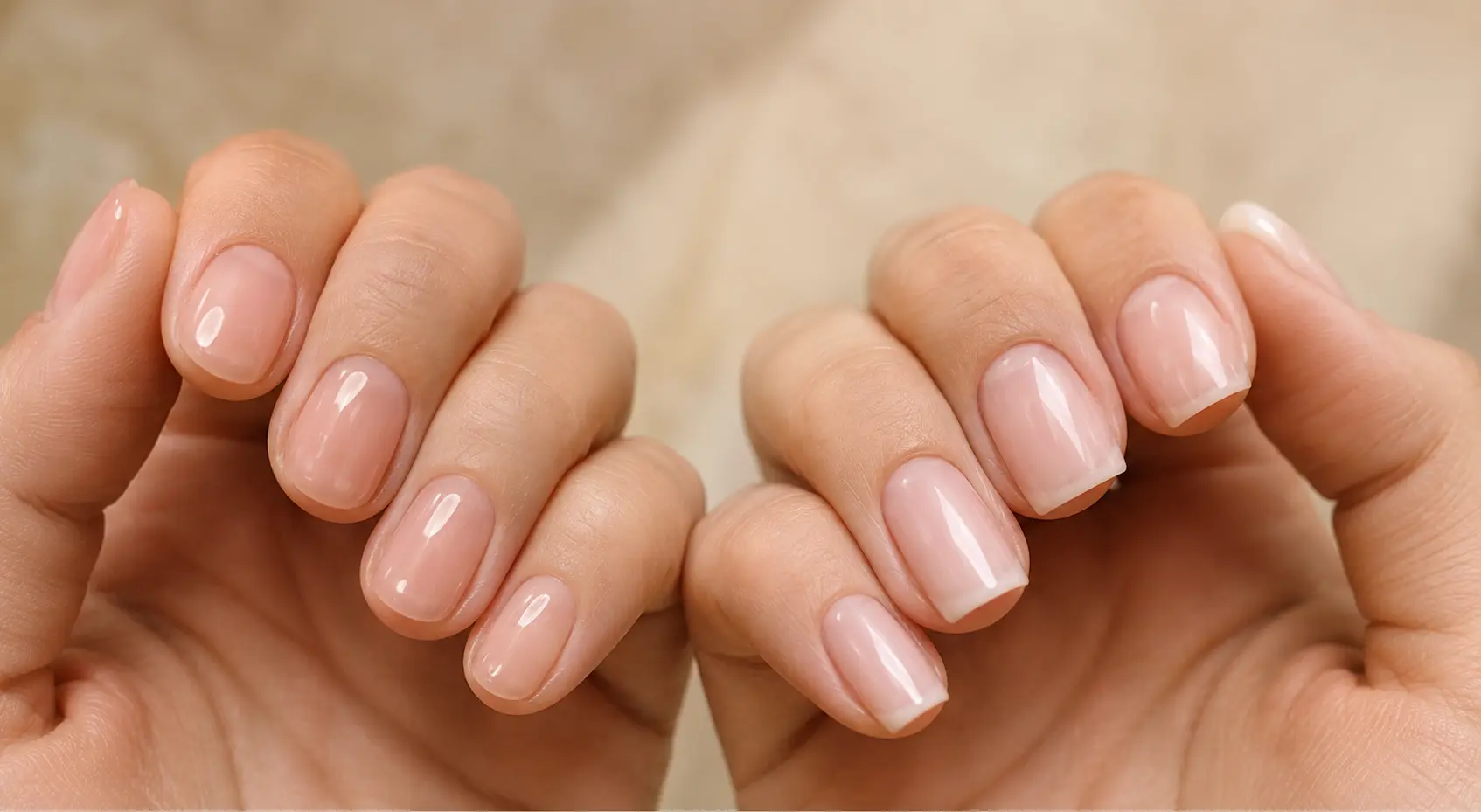

If your nails bend, peel, or break easily, comparing acrylic vs gel nails starts with how each service is applied and removed. Soak-off gel is generally the better choice than acrylic when you still want a long-lasting salon manicure. Gel is more flexible, usually needs less aggressive preparation, and can often be removed by soaking instead of extensive filing. When comparing acrylic vs gel nails, remember that neither option is completely damage-free. That does not make gel harmless, however. Both gel and acrylic can leave already-weak nails thinner, drier, or more brittle when they are applied or removed roughly.
The safest answer depends on how weak your nails are. For nails that are only mildly bendy or prone to small chips, a short soak-off gel manicure may be reasonable. However, painful nails, splits that extend into the skin, lifting, discoloration, unusual thinning, or signs of infection are reasons to skip both systems and address the nail problem first.
For a broader comparison of the two services, start with our complete acrylic vs. gel nails comparison. This guide focuses specifically on what matters when the natural nail is already weak.
Is Gel or Acrylic Better for Weak Nails? The Quick Answer
| If your priority is… | Usually the better choice | Why |
|---|
| A thin, natural-looking manicure | Soak-off gel | It is lighter and more flexible than acrylic. |
| Mild support for short natural nails | Soak-off gel | It can add a protective coating without a thick extension. |
| Dramatic length or rigid structure | Acrylic | Acrylic is strong, but it is not the gentler option for weak nails. |
| Actively peeling, painful, or damaged nails | Neither | Covering the problem can worsen damage or hide a condition that needs attention. |
| A break while weak nails recover | Regular polish or no enhancement | This avoids repeated filing, soaking, and product removal. |
First, What Does ‘Weak Nails’ Mean?

Weak nails are usually described as nails that bend easily, peel in thin layers, split at the edges, or break before they can grow. A manicure coating can make them feel firmer while you wear it, but that temporary hardness is not the same as improving the condition of the natural nail underneath.
Frequent wetting and drying, cleaning products, picking or biting, aggressive buffing, and repeated enhancement removal can all contribute to weakness. Persistent nail changes can also be associated with skin conditions, infection, injury, or other health issues.
A manicure should not be used to hide a nail that is painful, swollen, separating from the nail bed, or changing color without an obvious reason.
Which Type of Gel Are We Talking About?

The word gel can describe several different services. This article’s recommendation mainly refers to soak-off gel polish applied over short natural nails. It is painted in thin layers and cured under a UV or LED lamp. When the correct removal process is used, the product softens in acetone.
Builder gel, hard gel, soft gel extensions, and gel polish are not identical. Some builder gels soak off, while hard gel usually must be filed down.
If a service requires substantial filing or creates a long, rigid extension, it may not offer the same gentle advantage as a thin soak-off gel manicure. Ask the technician exactly which product will be used before you book.
Is Gel or Acrylic Better for Weak Nails? Why Gel Is Usually Better
The American Academy of Dermatology recommends choosing soak-off gel rather than acrylic when someone wants artificial nails but also wants to reduce nail damage. Its guidance notes that gel is more flexible than acrylic, so the natural nail is less likely to crack.
If you are wondering is gel or acrylic better for weak nails, soak-off gel is usually the gentler choice when the nails are only mildly weak and you want to keep them short.
1. Gel Is More Flexible
Acrylic creates a hard, rigid structure. That strength is useful for extensions, but it can transfer more force to the natural nail if the enhancement catches or bends.
Soak-off gel has more give. On weak, short nails, that flexibility is often a better match than a stiff extension.
2. Preparation Can Be Lighter
A careful gel-polish service usually needs only gentle surface preparation. Acrylic often requires the natural nail to be filed until it is rough enough for the product to adhere.
Filing removes part of the nail plate, which is the last thing an already-thin nail needs. The technician’s technique still matters. Over-buffing before gel can also cause damage.
3. Soak-Off Removal Can Reduce Heavy Filing

Soak-off gel can usually be softened with acetone and removed without prying. Acrylic removal commonly combines filing and acetone, and maintenance requires regular fills as the nail grows.
Neither removal method is completely gentle, but a correctly removed soak-off gel manicure is generally less intensive than repeatedly filing and filling acrylic.
4. Short Gel Manicures Limit Leverage
Length matters as much as product. A long nail acts like a lever when it catches on clothing, a drawer, or a bag.
Keeping a gel manicure short and close to your natural length reduces that leverage and makes accidental breaks less likely.
Gel Can Still Damage Weak Nails
Gel should be considered the gentler option, not a damage-free option. Repeated gel manicures can contribute to brittleness, peeling, and cracking. The most common problems are often connected to preparation and removal rather than the glossy coating itself.
- Peeling gel off can pull away superficial layers of the natural nail.
- Aggressive scraping after soaking can roughen and thin the nail plate.
- Acetone can dry the nails, cuticles, and surrounding skin.
- Frequent UV exposure from curing lamps affects the skin on the hands.
- Uncured product on the skin can contribute to irritation or an acrylate allergy in susceptible people.
If you choose gel, use broad-spectrum, water-resistant SPF 30 or higher on the hands before curing, or wear dark, opaque fingerless manicure gloves.
Do not apply sunscreen directly to the nail plate immediately before the service because oils and residue may affect adhesion.
Why Acrylic Is Usually Harder on Weak Nails
Acrylic is valuable when someone wants substantial length, a strong sculpted shape, or a repair that needs rigid structure. Those benefits do not make it the best starting point for weak nails.
- The natural nail is commonly roughened so acrylic can bond, which can make thin nails thinner.
- The rigid enhancement can put stress on a weak natural nail if it catches or lifts.
- Fills are usually needed every few weeks, creating repeated preparation and maintenance.
- Removal often requires reducing product with a file before an acetone soak.
- Lifting or prying acrylic off can remove layers from the natural nail and cause significant damage.
Acrylic can make a weak nail feel protected while it is covered, but it does not strengthen the nail that is growing underneath.
When the enhancement comes off, the original weakness may still be present, sometimes with added surface damage from preparation or removal.
When Neither Gel Nor Acrylic Is the Right Choice
Sometimes the best manicure for weak nails is a temporary break from enhancements. Choose regular polish or leave the nails bare if you notice any of the following:
- Pain, tenderness, swelling, warmth, or pus around the nail
- A nail lifting or separating from the nail bed
- Green, yellow, brown, or dark discoloration that is not simply polish staining
- Splits that extend into the pink, attached part of the nail
- Persistent peeling or thinning that continues despite a break from manicures
- Itching, burning, blisters, or a rash after gel, acrylic, glue, or nail products
A dermatologist can examine ongoing nail changes and help determine whether the cause is repeated trauma, an allergy, a skin condition, an infection, or something else.
Covering a questionable nail can delay that evaluation and may trap moisture beneath a lifting enhancement.
How to Make a Gel Manicure Gentler on Weak Nails

If your nails are mildly weak but otherwise healthy and you decide to get gel, the following details matter more than the brand name on the bottle.
- Choose soak-off gel polish over hard gel or a rigid extension system.
- Keep the nails short and avoid a shape with sharp corners that catch easily.
- Ask the technician to use only light buffing and to avoid thinning the natural nail.
- Do not cut the cuticles. Cuticles help protect the nail area from infection.
- Protect the skin on your hands before the curing lamp is used.
- Have lifting gel removed properly instead of peeling or picking it.
- Moisturize the nails and cuticles with hand cream, petroleum jelly, or cuticle oil after removal.
- Take a break between long-wear manicures when your nails feel dry, thin, or tender.
Removal products also make a difference. Our nail polish remover vs. acetone guide explains when pure acetone is necessary and how to limit unnecessary dryness.
What to Ask at the Nail Salon
A skilled technician should be able to explain the system and removal process clearly. Before the service begins, ask:
- Is this soak-off gel polish, builder gel, or hard gel?
- How much will you buff my natural nail?
- Can you keep the manicure short and avoid extensions?
- How will this product be removed?
- Can you leave my cuticles uncut?
- Are your tools cleaned and disinfected between clients?
If the explanation includes heavy drilling on the natural nail, forcefully scraping product away, or pulling off an old enhancement, it is reasonable to stop the service.
The quality of the application and removal matters as much as choosing gel instead of acrylic.
Gel vs. Acrylic for Weak Nails by Situation
| Your situation | Practical choice |
|---|---|
| Nails are mildly bendy but not painful | Try a short soak-off gel manicure with minimal buffing. |
| Nails peel in layers after repeated manicures | Take a break from gel and acrylic; use moisturizer and regular polish if comfortable. |
| You want dramatic length | Acrylic can provide structure, but it is not ideal while natural nails are weak. Consider waiting until they recover. |
| You want long-lasting color on short nails | Soak-off gel is generally the more suitable option. |
| You have lifting, discoloration, swelling, or pain | Choose neither and seek professional evaluation. |
| You have reacted to nail products before | Avoid both until a dermatologist identifies what may have caused the reaction. |
If you are also considering another durable system, compare dip powder vs. gel nails before booking. Dip can feel very hard while worn, but its removal can also be demanding on thin or brittle nails.
Frequently Asked Questions

The Final Verdict
If you’re asking is gel or acrylic better for weak nails, soak-off gel is generally better than acrylic for mildly weak nails. It is more flexible, can be kept thin and short, and usually requires less aggressive preparation and removal.
Acrylic remains useful for strength and length, but those same rigid, high-maintenance qualities make it a less forgiving choice when the natural nail is already fragile.
The most important choice may not be gel versus acrylic. It is choosing a careful technician, keeping the manicure short, avoiding over-filing, and removing the product without peeling or force.
If your nails are actively damaged or showing unusual changes, choose neither until the problem has been assessed.
At MorningFable, we want beauty choices to feel easier to understand and safer to maintain. Use this guide as a practical starting point, then choose the lightest service that gives you the look you want without ignoring what your natural nails are telling you.


