
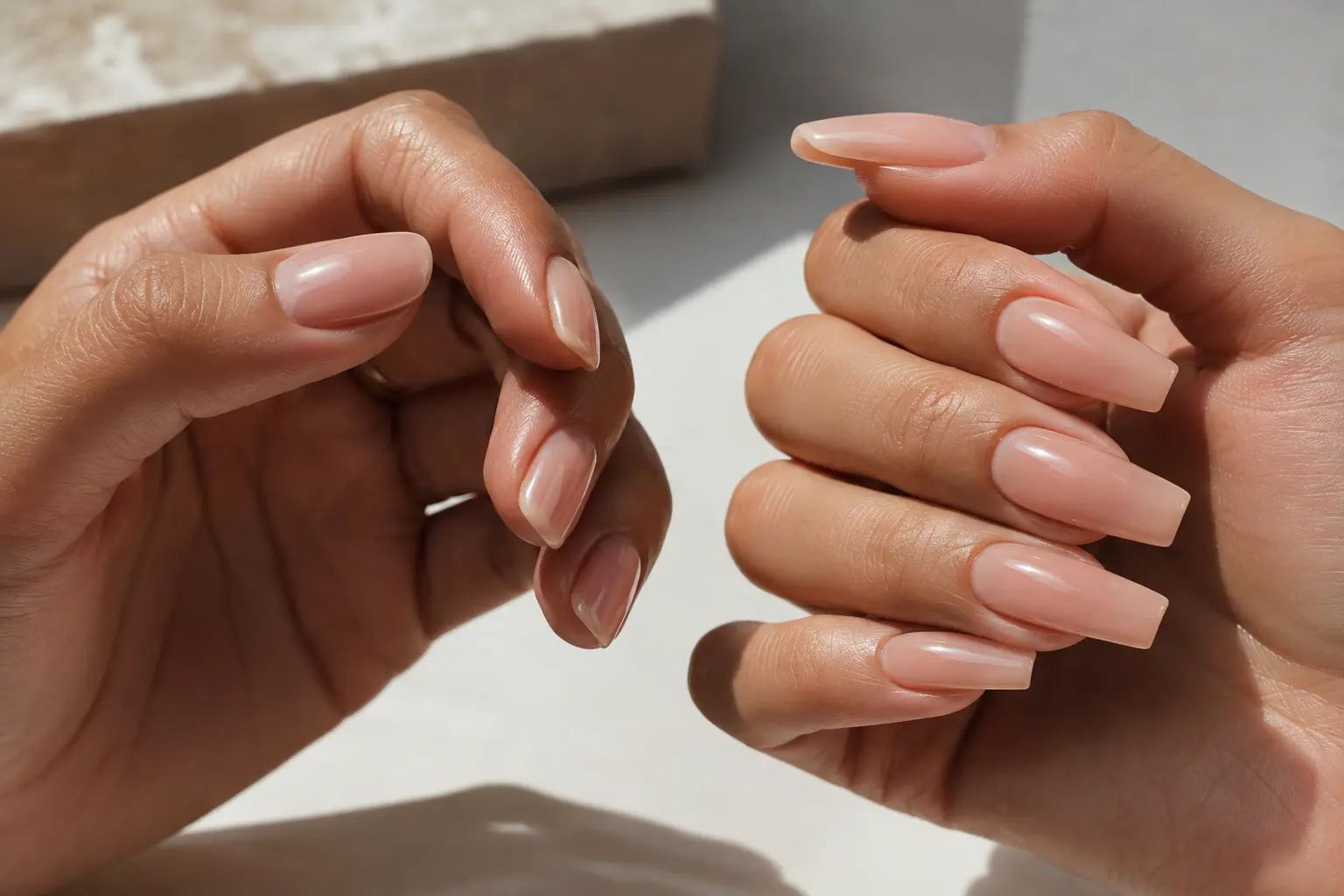

If you have ever sat at a nail salon staring at the service menu, torn between acrylic vs gel nails, you are definitely not alone.
Both can give you a polished manicure that lasts much longer than regular nail polish. But after wearing both styles, I have found that they feel surprisingly different in everyday life.
Acrylic nails feel stronger and more structured. They are particularly useful when I want extra length or a dramatic shape. Gel feels lighter and more flexible, and I usually prefer it when I want my nails to look closer to natural nails.
But appearance is only part of the decision. You also need to consider durability, maintenance, removal, your natural nail condition, and how you actually use your hands.
Here is my practical comparison of acrylic vs. gel nails and what I would choose in different situations.
Acrylic vs. Gel Nails at a Glance
| Feature | Acrylic Nails | Gel Nails |
|---|---|---|
| Look | More structured and sometimes thicker | Glossy and usually more natural-looking |
| Feel | Hard and rigid | Lighter and more flexible |
| Strength | Excellent | Good to excellent, depending on the gel system |
| Length | Excellent for long extensions | Good for short to medium lengths and extensions |
| Curing | Hardens in air | Usually cured under a UV/LED lamp |
| Maintenance | Usually needs regular fills | Depends on the type of gel |
| Removal | Often involves acetone and/or filing | Soak-off gels can be removed with acetone |
| Best for | Length, strength, dramatic shapes | Natural-looking, flexible manicures |
| Main drawback | Can feel heavy and rigid | Requires curing and may be less suitable for extreme length |
My quick verdict: If durability and length are my priorities, I would choose acrylic. If comfort and a natural-looking finish matter more, I would choose gel.
What Are Acrylic Nails?
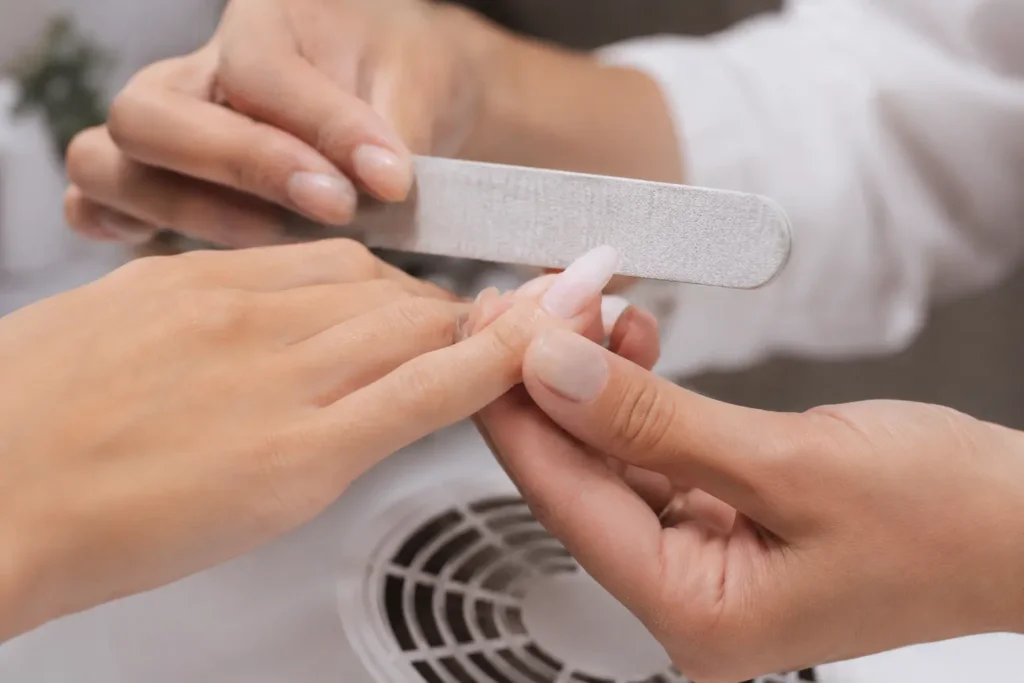
Acrylic nails are created by combining a liquid monomer with a powder polymer. Your nail technician mixes the two into a workable bead, applies it over your natural nail or an extension, and shapes it before it hardens.
Unlike most gel systems, acrylic doesn’t require a curing lamp. It hardens after exposure to air.
One thing I immediately notice with acrylics is how solid they feel. That’s useful when you want long coffin, almond, square, or stiletto nails because the acrylic provides plenty of structure.
The downside is that I am much more aware that I am wearing an enhancement. Acrylic doesn’t have the same flexibility that I associate with a softer gel manicure.
What I Like About Acrylic Nails
Acrylic makes the most sense to me when the design depends on structure.
- Long extensions
- Dramatic nail shapes
- Nail art that needs a sturdy base
- People who are hard on their hands
- Correcting uneven nail lengths
Another advantage is maintenance. Instead of removing the entire set whenever your nails grow, a nail technician can often fill the new growth. The Cleveland Clinic notes that acrylic sets can potentially last for several weeks, although fills are generally needed every two to three weeks as the natural nail grows.
What Are Gel Nails?
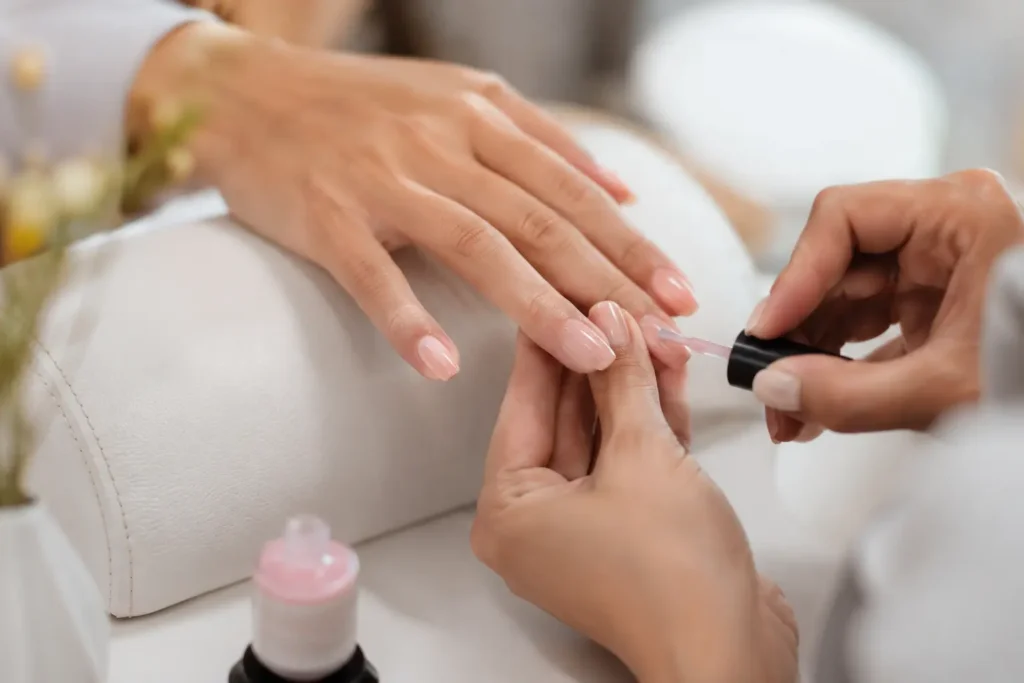
“Gel nails” can actually mean several things. There is gel polish applied over natural nails, builder gel used to add structure, hard gel, and soft-gel extension systems.
That distinction matters. A simple gel manicure over your natural nails is not really equivalent to a full acrylic extension. If you want a fair comparison, you need to compare acrylic extensions with a gel system capable of providing similar structure or length.
Most gels cure under a UV or LED nail lamp rather than hardening naturally in the air.
What I Like About Gel Nails
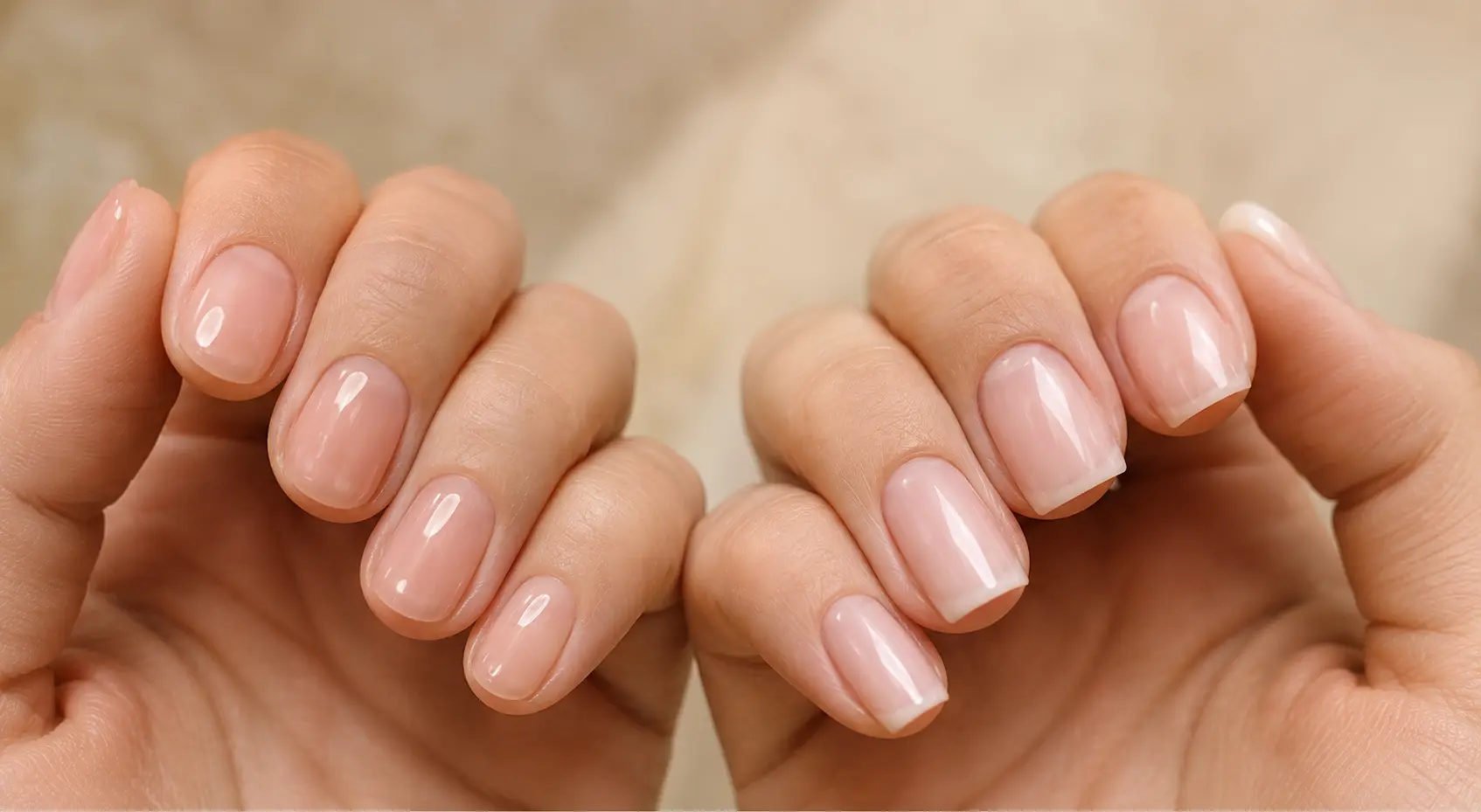
The biggest difference for me is how they feel. Gel generally feels lighter and less rigid on my fingers. When I want short almond or rounded nails that look polished without screaming “extensions,” I prefer the finished appearance of gel.
Gel is also incredibly glossy. That glass-like shine is one reason I find myself choosing gel for simple manicures where the color and finish are the main attraction.
Acrylic vs. Gel Nails: The Differences I Notice Most
1. Gel Usually Looks More Natural
If I had to choose purely on appearance, gel would win for everyday nails.
Acrylic can absolutely look natural when applied by a skilled nail technician. However, it is easier for acrylic to become bulky if too much product is used.
Gel tends to create the thinner, glossier finish I personally prefer for neutral colors, French manicures, sheer pinks, and short almond nails. If this softer finish is what you like, browse our elegant white nail ideas for milky, French, chrome, and minimalist inspiration.
Winner for a natural appearance: Gel
2. Acrylic Wins When I Want Serious Length
This is where acrylic earns its reputation. If I want significantly longer nails or a dramatic shape, I feel more confident with the structure of acrylic.
The material becomes very hard once it cures, making it particularly useful for building extensions. Gel extensions can also create impressive length, but for an extra-long manicure, acrylic remains my preference.
Winner for long nails: Acrylic
3. Gel Feels More Comfortable
This was one of the biggest differences I noticed when switching between the two. Acrylic nails can feel noticeably rigid, especially during the first day or two.
Gel feels more flexible. That doesn’t necessarily mean gel is weaker. It simply feels more forgiving during normal hand movements.
The American Academy of Dermatology also notes that soak-off gel nails are more flexible than acrylic nails, which can make your natural nails less likely to crack.
Winner for comfort: Gel
Which Lasts Longer: Acrylic vs Gel Nails?
This question is slightly misleading because both manicures require maintenance as your natural nails grow.
Acrylic is extremely durable, but you will normally start seeing a gap near the cuticle as your nail grows. That’s why fills are commonly performed every two to three weeks.
Gel polish commonly stays attractive for a couple of weeks, although longevity varies considerably depending on your nail preparation, products, nail growth, and daily activities.
I wouldn’t choose between the two based purely on the maximum number of weeks someone claims they can last. Instead, ask yourself: What will still look good after two or three weeks of my normal routine?
For someone who types all day and keeps relatively short nails, gel may be more than durable enough. For someone who repeatedly breaks extensions or wants substantial length, the additional rigidity of acrylic may be worth it.
Acrylic vs. Gel Nails for Nail Art
This one is almost a tie. Both acrylic and gel can create beautiful nail art.
Acrylic gives your nail artist a strong canvas for elaborate designs, embellishments, sculpted shapes, and very long extensions.
Gel is fantastic for glossy minimalist designs, chrome nails, French tips, aura nails, and detailed painted designs. For more playful design inspiration, see our whimsy nail ideas.
I would choose based on the style rather than assuming one material is universally better.
Acrylic is preferable for:
- Long stiletto nails
- 3D embellishments
- Dramatic coffin nails
- Highly structured sets
I would choose gel for:
- Short almond nails
- Minimalist nail art
- Glazed finishes
- French tips
- Chrome
- Natural-looking manicures
Do Acrylic Nails Damage Your Natural Nails?
They can, especially when application or removal involves aggressive filing.
Before acrylic is applied, the natural nail is typically prepared so the product can adhere properly. Excessive filing can thin the nail plate.
The American Academy of Dermatology warns that filing the natural nail surface for acrylic application can make nails thinner and weaker. Frequent artificial-nail touch-ups may also contribute to damage.
Removal matters just as much. Trying to peel or pry acrylic nails off is one of the things I would avoid completely.
It is tempting when an acrylic starts lifting, but the enhancement can take layers of your natural nail with it. If my acrylic starts lifting significantly, I would rather have it professionally removed than turn removal into a DIY experiment.
Are Gel Nails Better for Your Natural Nails?
Not automatically. Gel may feel gentler because it is more flexible, but gel manicures can still cause brittleness, peeling, and cracking.
Removal is particularly important. Soak-off gel is preferable when minimizing filing is a priority. The American Academy of Dermatology specifically recommends choosing soak-off gel rather than gel that has to be filed away.
Another difference is the curing lamp. Gel products generally need UV radiation to cure. The AAD recommends choosing an LED curing light because it emits lower levels of UV radiation than a traditional UV curing light and cures the polish faster.
If you get gel manicures regularly, this is something worth asking your salon about.
What About Allergies?
This is one part of nail care that deserves more attention. Acrylates used in nail products can cause allergic contact dermatitis in some people.
The FDA recommends avoiding skin contact with methacrylate monomers used in artificial nail products to reduce the chance of an allergic reaction.
That is one reason I wouldn’t treat getting gel product all over the cuticles as harmless. Good application should keep uncured product primarily on the nail rather than repeatedly coating the surrounding skin.
If you experience persistent redness, itching, swelling, peeling, or another unusual reaction around your nails after a manicure, don’t simply cover the problem with another set. Stop using the suspected product and consider speaking with a dermatologist.
Acrylic vs. Gel Removal
I have learned to judge a manicure partly by how it comes off. A gorgeous manicure isn’t worth much if removal leaves my natural nails paper-thin.
Acrylic Removal
Acrylic removal commonly involves filing down the product and soaking it in acetone. The process can be time-consuming, particularly with thick extensions.
Gel Removal
Removal depends on the gel. Soak-off gel can generally be filed lightly and soaked with acetone. Hard gel may need to be filed off instead.
The biggest mistake with either system is peeling. Once gel starts lifting, it is incredibly satisfying to peel it off. Unfortunately, you may also peel away superficial layers of the natural nail.
My rule now is simple: if it doesn’t want to come off easily, I don’t force it.
Which Is Cheaper?
Prices vary too much between salons and locations for one universal answer.
A basic acrylic set may sometimes cost less than elaborate gel extensions, while premium nail art can make either option considerably more expensive.
Instead of comparing only the initial appointment price, compare the initial application, nail art, fills, repairs, removal, and how frequently you plan to redo the manicure.
A small difference at the first appointment isn’t particularly meaningful if one option requires more frequent salon visits for your lifestyle.
Acrylic vs. Gel Nails for Short Nails
For short nails, I usually prefer gel. If your natural nails already have the length you want, a gel manicure can add color, shine, and some protection without dramatically changing the appearance of the nail. Short gel nails also work beautifully for clean, understated styles like the looks in our elegant white nail ideas.
Builder gel can provide additional structure when needed. Acrylic still has a place on short nails, particularly if your natural nails are uneven or you need extra strength.
My choice: Gel
Acrylic vs. Gel for Long Nails
For long extensions, I prefer acrylic. The rigidity and strength become advantages when you are asking the enhancement to extend significantly beyond your natural nail. If you are choosing extensions for a special event, our prom nail ideas show how longer shapes can work with chrome, rhinestones, French tips, and other detailed designs.
Gel extensions are absolutely an option, especially if you prefer their lighter feel, but acrylic would be my first choice for dramatic length.
My choice: Acrylic
Acrylic vs. Gel for Beginners
If you have never had artificial nails before, I would start conservatively.
A short gel manicure lets you experience having a long-lasting salon manicure without immediately committing to very long extensions.
Going from completely natural nails to extra-long acrylics can require a surprising adjustment. Typing, fastening jewelry, opening cans, inserting contact lenses, and even picking up coins suddenly feel different.
Start short. You can always go longer at your next appointment.
So, Are Gel Nails Better Than Acrylic?
For most everyday manicures, I prefer gel. The lighter feel, flexibility, glossy finish, and more natural appearance fit what I normally want from my nails.
But that doesn’t make acrylic outdated or inferior. Acrylic is still my choice when I want significant length, maximum structure, dramatic shapes, or a sturdy base for elaborate nail art.
Think of it less as “Which product is better?” and more as “Which product is better for the manicure I want?”
How I Choose Between Acrylic and Gel
After trying both, this is the easiest way I have found to decide.
Choose acrylic if: You want long extensions, dramatic shapes, or a very hard and structured manicure.
Choose gel if: You want shorter nails, flexibility, a glossy finish, and something that feels closer to your natural nails.
And if your natural nails are already damaged, peeling, painful, or unusually thin? I would skip both temporarily. Covering damaged nails with another enhancement may hide the problem rather than solve it.
How to Make Either Manicure Easier on Your Nails
Whichever system you choose, technique matters as much as the material. I now pay attention to a few things during every salon visit:
- I don’t let anyone aggressively file my natural nail.
- I ask the technician not to cut away healthy cuticles unnecessarily.
- I don’t peel lifting gel or acrylic off myself.
- I moisturize my hands and cuticles between appointments.
- I don’t ignore lifting, pain, redness, or discoloration.
- I give my nails a break if they start feeling noticeably weak.
Your cuticles have a purpose. They help protect the nail area from infection, which is why the AAD recommends leaving them intact rather than routinely cutting them away. A good manicure should leave you excited about your nails, not worried about what is happening underneath them.
Final Verdict: Acrylic or Gel?
If you asked me to choose only one for regular wear, I would choose gel nails.
They feel lighter, look more natural to me, and work better with the short-to-medium nail lengths I find practical for everyday life. If you prefer this polished, natural-looking direction, you may also like our minimalist wedding nail ideas.
But when I want long, dramatic nails that need serious structure, acrylic wins.
There isn’t really a universal winner in the acrylic vs. gel nails debate. The better choice depends on your desired length, nail shape, lifestyle, natural nail condition, and how much maintenance you’re willing to do.
Most importantly, don’t judge a manicure only by how beautiful it looks on day one. Pay attention to how your nails feel during the next two weeks and how healthy they look after removal. That’s usually a much better indication of whether a nail system works for you.
Frequently Asked Questions
Sources & Further Reading
- American Academy of Dermatology: Artificial Nails: Dermatologists’ Tips for Reducing Nail Damage – https://www.aad.org/public/everyday-care/nail-care-secrets/basics/pedicures/reduce-artificial-nail-damage
- U.S. Food & Drug Administration: Nail Care Products – https://www.fda.gov/cosmetics/cosmetic-products/nail-care-products
- Cleveland Clinic: Are Acrylic Nails Bad for Your Nails and Skin? – https://health.clevelandclinic.org/are-acrylic-nails-bad-for-you
- Cleveland Clinic: Is Gel Nail Polish Bad for Your Nails? – https://health.clevelandclinic.org/you-guessed-right-gel-nail-polish-is-bad-for-your-nails



Pingback: Is Gel or Acrylic Better for Weak Nails? A Clear Guide